A Bihar land record can look like a page of unfamiliar words. People often sign documents or pay for services without being sure what a term means. This glossary explains the words you will meet on the Bihar Bhumi portal and in land offices, in the order you are most likely to need them.
Words that identify the land
- Mauza
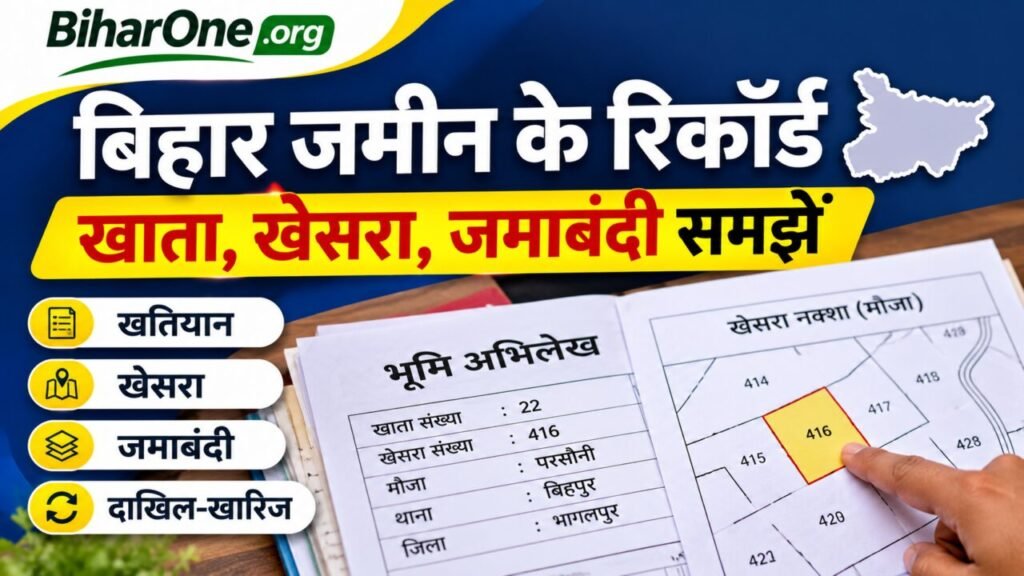
- The revenue village, which is the basic unit for land records. It may not match the name of the village people use in daily life, so check the mauza name carefully when searching.
- Khata
- An account number that groups the land held by one owner or one joint family in a mauza. A khata can include several plots.
- Khesra
- The plot number. Two plots in the same mauza have different khesra numbers. When you search, the khata and khesra numbers together point to a particular piece of land.
- Rakba
- The area of the plot or holding, as recorded. Check the unit used in the record before you compare it with a deed.
- Anchal
- The revenue circle that looks after land records for a group of mauzas. The officer in charge is the Circle Officer, who handles mutation and many land-related requests.
Words that describe ownership and records
- Jamabandi
- The register of land holdings and rights, showing who holds which khata and plots in a mauza. It is the record people check most often to confirm who is shown as the owner.
- Khatiyan
- The record of rights prepared in a land survey. It is the base record that later entries and corrections refer to.
- Raiyat
- A person who holds land and is recorded as its holder or tenant in the revenue record.
- Bhu Naksha
- The cadastral map of the village, showing plot boundaries. You can view maps on the Bhu Naksha portal.
Words that describe changes and payments
- Dakhil kharij (mutation)
- The process of changing the name in the revenue record after a sale, gift, inheritance or partition. A registered deed alone does not change the revenue record. Mutation does.
- Lagan (land rent)
- The rent paid to the government on land. A paid rent receipt is a useful supporting document for many later applications.
How to use these terms on Bihar Bhumi
- Open the portal. Go to biharbhumi.bihar.gov.in and choose the service for viewing your records.
- Select the place. Choose district, anchal and mauza. If you cannot find your village, ask a family member for the revenue mauza name from an old document.
- Search. Use the owner name, or the khata or khesra number if you have it.
- Read the entry. Check the owner name, khata, khesra, area and any remarks.
- Compare with your deed. Look for differences in name spelling, area or plot number.
Common mismatches to look for
- The seller is not shown as the holder in the record. Resolve this before you buy.
- Area in the deed and area in the record differ.
- A deceased owner is still shown, which means mutation after inheritance is pending.
- The name is spelled differently from your ID.
These are normal and fixable, but they take time, so find them early. For the full process, including mutation and rent payment, read our Bihar Bhumi guide. For a big purchase, speak to a qualified lawyer, because a glossary cannot replace legal advice.